How can I use internal linking SEO to improve my Google website rankings

Internal linking SEO strategy showing spider web structure SEO

Internal linking SEO best practices start with understanding intent not tricks. I approach internal linking SEO as a way to guide users and search engines through meaning not manipulation. Done right it clarifies relevance, distributes authority and improves crawl efficiency.

  • Improve user experience
  • Retention time or increase engagement rate
  • Decrease bounce rate
  • Improve crawlability
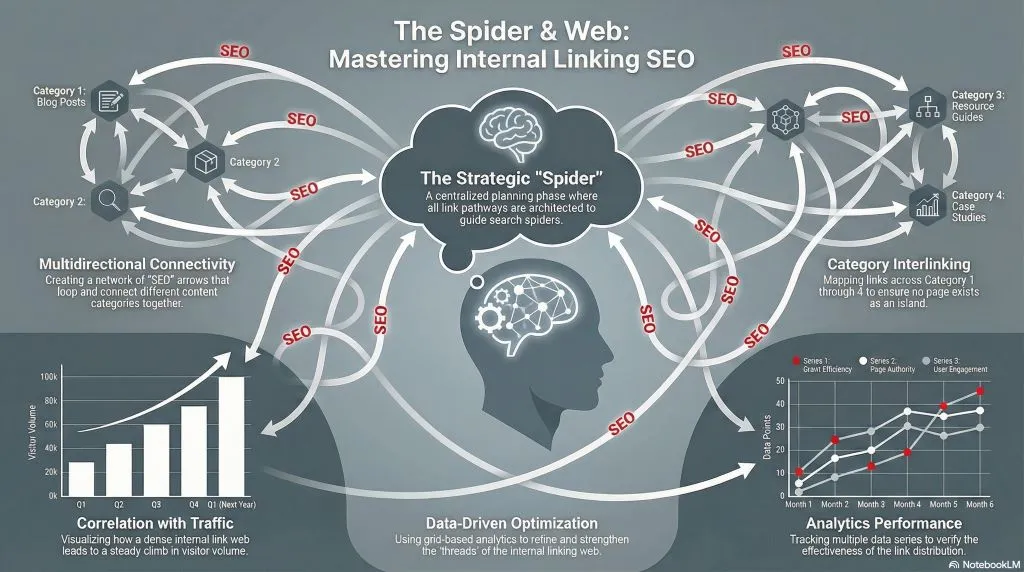
Internal linking SEO diagram showing spider web structure connecting categories to improve traffic growth

What role does internal linking play in how Google understands my site

From hands-on audits I’ve seen that internal links help Google interpret topical relationships. When related pages point to each other naturally the site communicates depth rather than fragmentation. This is especially clear on service based and content heavy sites.

In one long running client project improved internal links reduced orphan pages and increased indexation consistency. Rankings improved not because of volume but because relevance became clearer across sections.

Take place like thinking your pages are like a spider web. Having each page link each other makes search engines understand more without having to be forced to rank but understands more how structured it was.

How do I decide which pages deserve the most internal links

Anchor text should describe the destination honestly. I avoid over optimization because real users notice awkward phrasing long before algorithms do. A while anchor text in general must adopt the way how it is linked to other pages in order search engines understand more.

Across multiple site cleanups replacing repetitive anchors with descriptive language improved engagement and reduced bounce rates.

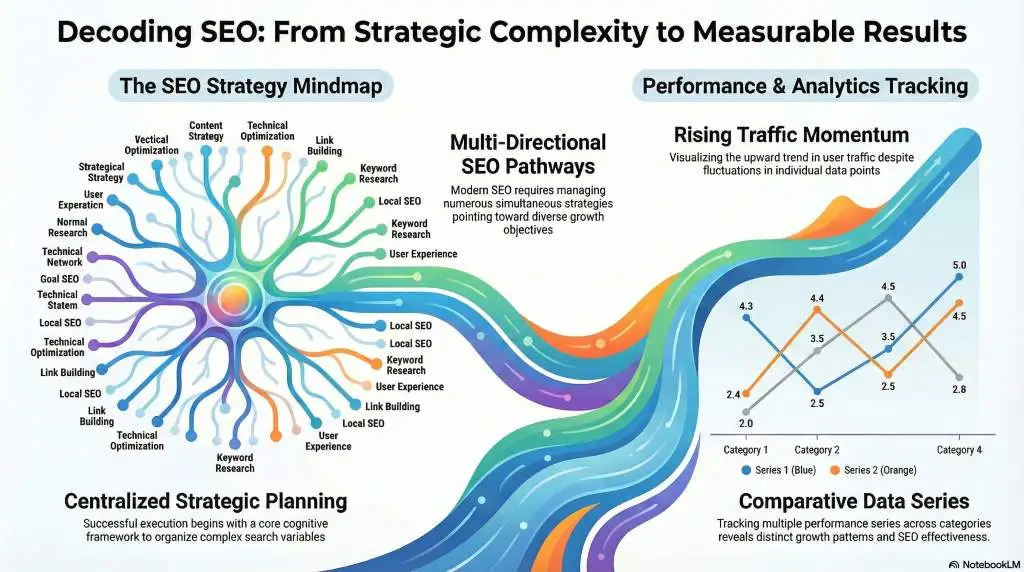
Internal linking SEO mindmap illustrating multi directional SEO pathways and measurable traffic results

How many internal links should a page realistically have

There is no fixed number that works universally. I rely on usability first ensuring links feel helpful rather than overwhelming which aligns with Google’s quality guidelines.

In tests excessive linking diluted focus while restrained linking improved user flow and crawl clarity. Balance matters more than metrics. 3 to 5 internal links in every page.

How should anchor text be written to support rankings

Anchor text should describe the destination honestly. I avoid over optimization because real users notice awkward phrasing long before algorithms do. A while anchor text in general must adopt the way how it is linked to other pages in order search engines understand more.

Across multiple site cleanups replacing repetitive anchors with descriptive language improved engagement and reduced bounce rates.

Internal links support topical authority

Relevance linking makes each topic more navigational. Topic relations make it easy for users to go page to page and grow when clusters are logically connected. Build internal links within themes so Google sees expertise instead of isolated posts.

This approach mirrors how trusted publishers organize archives and has consistently helped newer content rank faster.

How do I find internal linking opportunities at scale

With a start of content inventory indentifying relevance . By such a concept, build internal links within themes so Google sees expertise instead of isolated posts. Process is like repeatable to avoid some out of context work which keeps strategies more effective.

Internal linking affect crawl budget and indexation and often should internal links be updated

Internal links act as pathways. Pages with no links are harder for crawlers to prioritize especially on growing sites.In larger sites improved internal linking correlated with faster discovery of updated pages during reindexing cycles.

Links should evolve as content evolves.Review them during major updates not constantly but intentionally.This keeps structures clean while preserving historical value.

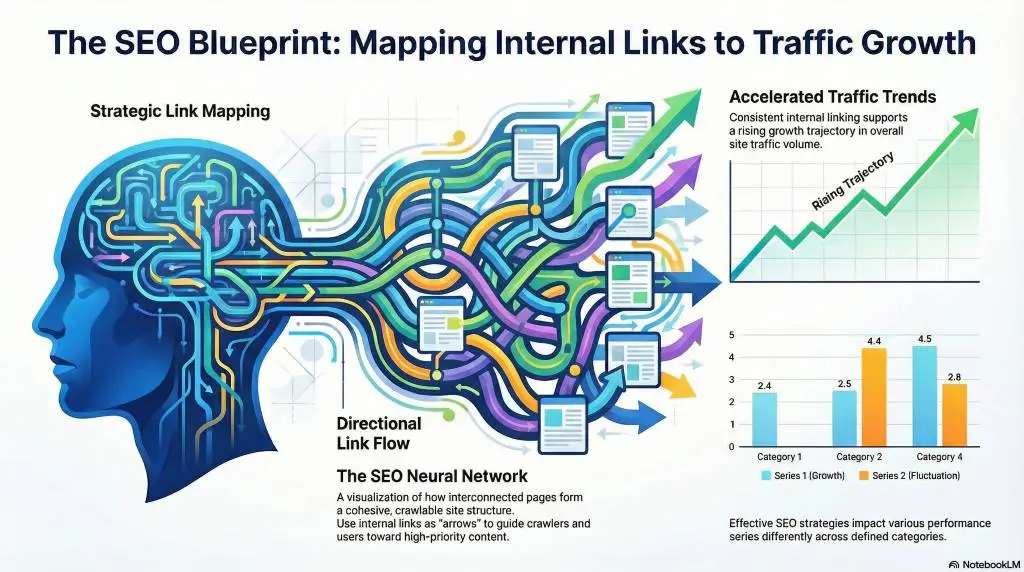
Internal linking SEO blueprint mapping strategic link flow to website traffic growth analytics

How do internal links influence user behavior

Good internal links extend sessions and reduce bounce rate. When users find what they expect, trust increases. Users are more interactive the way they react to each page and less hustle giving convenience. More traffic acquisition against more users.

Analytics repeatedly show longer dwell time when links are contextual rather than navigational only.

How do I measure success from internal linking changes

I track rankings, crawl stats engagement and assisted conversions. No single metric tells the full story of the strategy.Internal linking more defined website structure and SEO friendly pages.

Over time patterns emerge showing which structures genuinely help growth.

Internal linking SEO best practices work best when rooted in clarity, trust and usefulness. If you want help applying internal linking SEO best practices to your site with a proven strategic approach reach out and let’s turn your content into a connected system that drives rankings and revenue.

RELATED POST

Leave a Comment

Your email address will not be published. Required fields are marked *

Scroll to Top